Mill Liners & Lining Systems
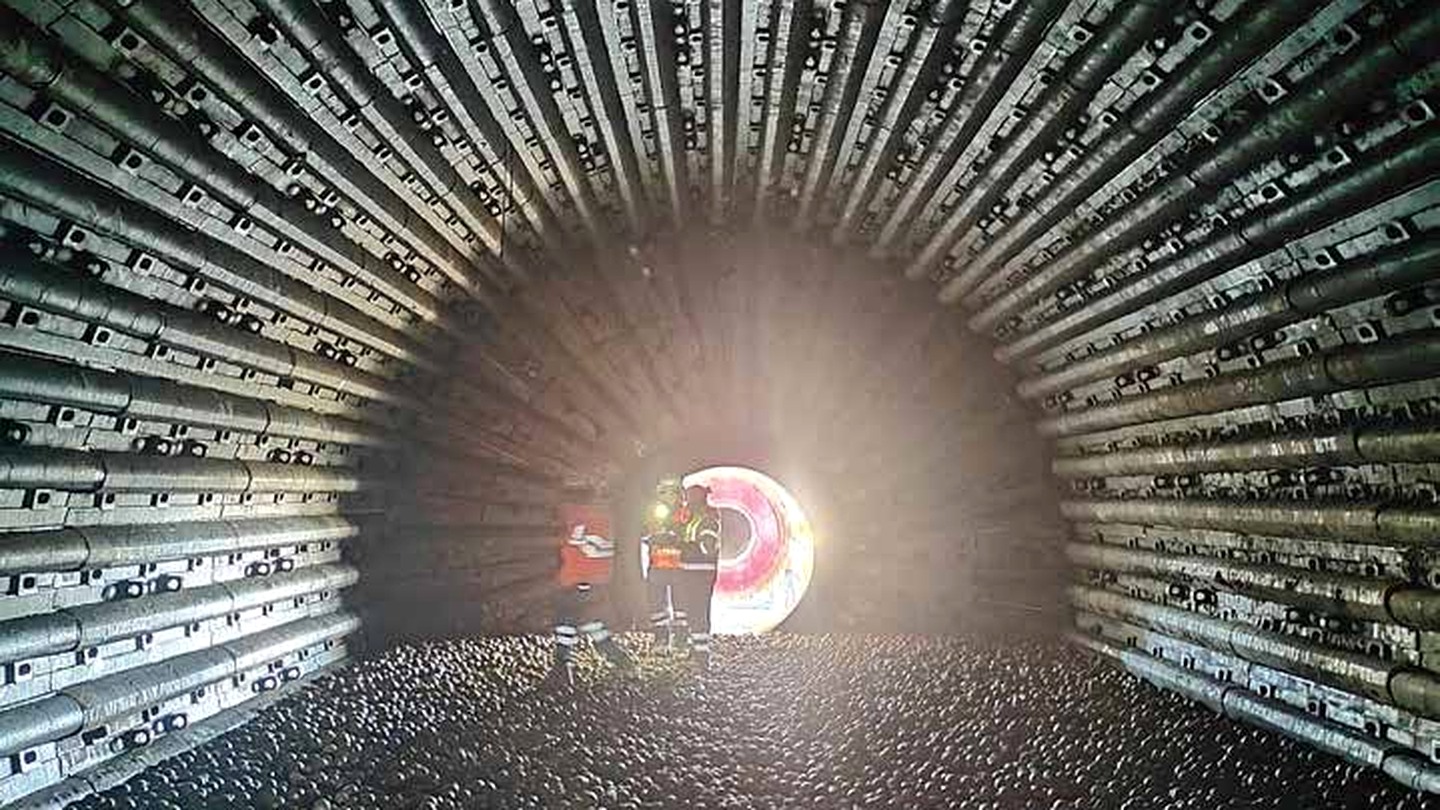
Manganese steel, Cr-Mo alloy, rubber and composite liners for SAG, AG and ball mills — designed from charge trajectory simulation, cast by China's leading heavy foundries, and installed faster with Megaliner and liner-handler systems.
Liners engineered for your ore, not off the shelf
A mill liner does three jobs at once: it protects a shell that costs millions, it lifts the charge that does the grinding, and it decides how long the mill stops when it wears out. Yanvic treats liners as an engineering product, not a commodity casting — every lining we supply starts from your ore's breakage characteristics (JK drop weight / SMC data), your mill's speed and filling, and a simulated charge trajectory.
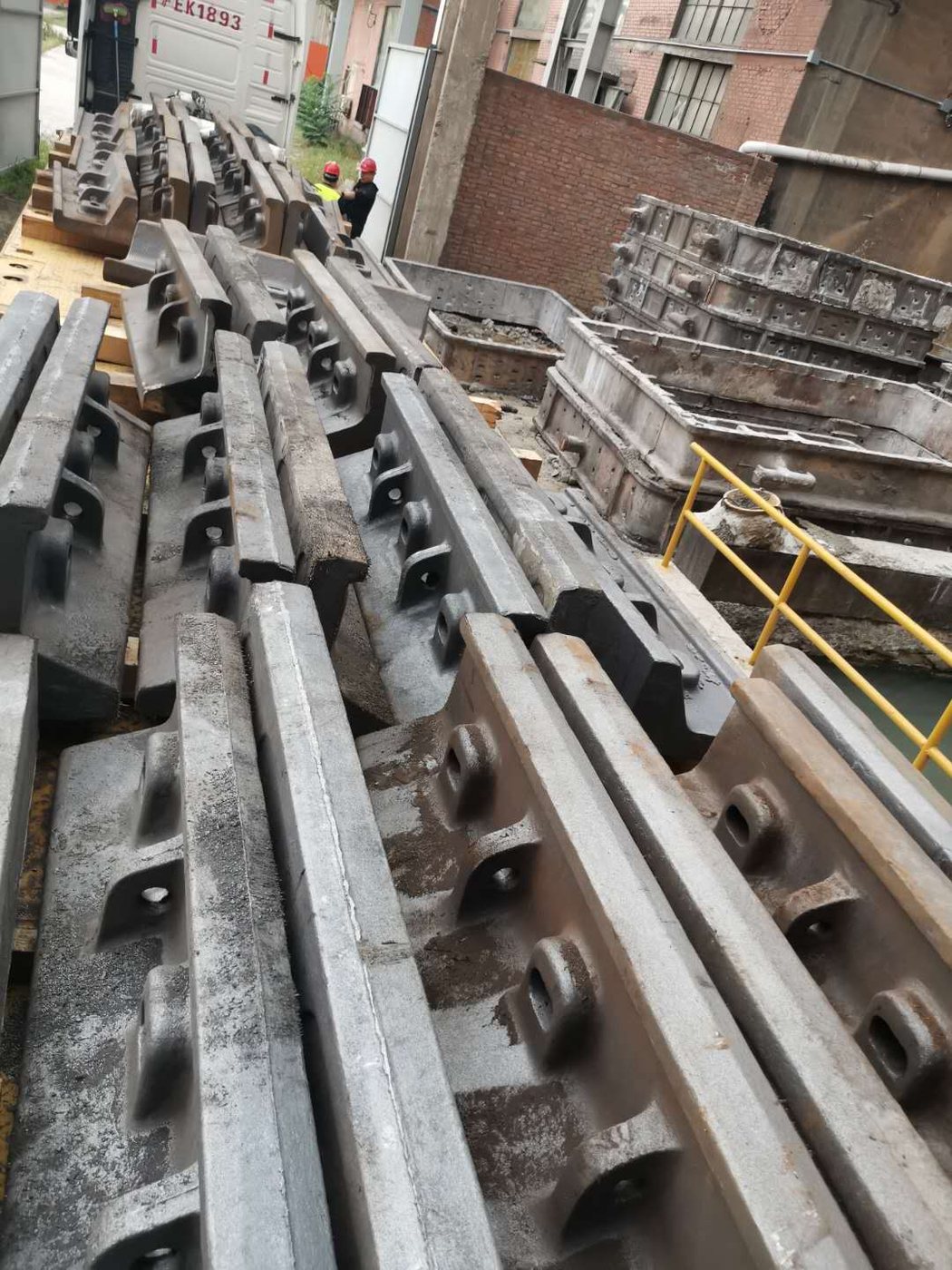
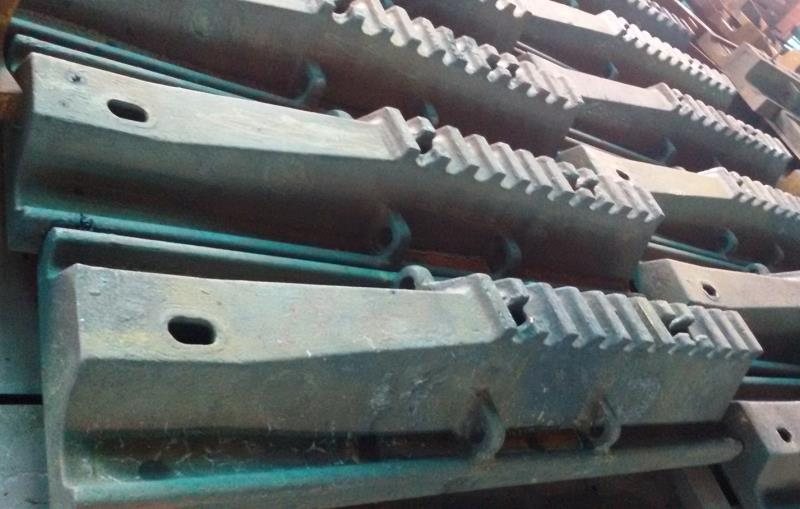
We cover the full material spectrum — high manganese steel, Cr-Mo alloy steel, rubber, and metal-rubber composite systems — and the full component list: shell plates, lifter bars, head liners, grate plates, pulp lifters and trommel panels. Casting is entrusted to CITIC Heavy Industries and Taiyuan Heavy Industry (TZCO), two of China's largest heavy foundries, with Yanvic engineers following every heat through a strict ITP.
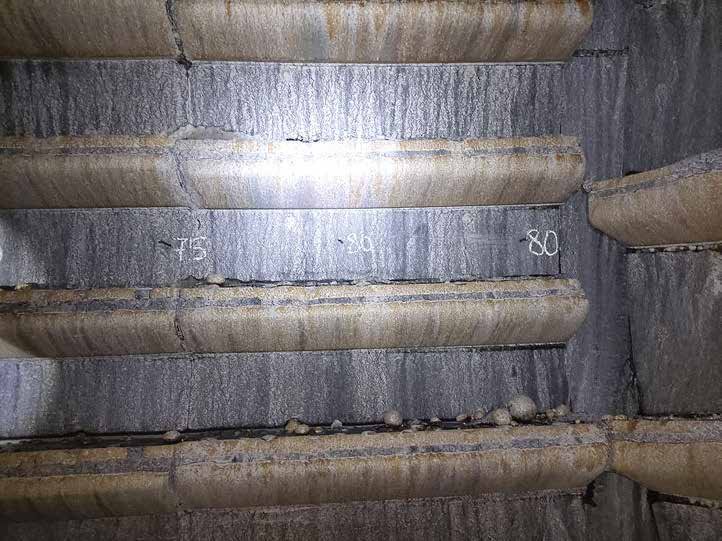
Performance reference: Cr-Mo shell liners and lifters we supply for Ø8.53×3.96 m SAG mills have exceeded 110 days of continuous service, with the best campaigns reaching 180 days.
What we supply
- Shell liners, lifter bars, head (end) liners, grate plates, pulp lifters
- High manganese steel, Cr-Mo alloy steel, rubber and composite linings
- Megaliner systems designed for mill liner handler installation
- Charge trajectory simulation and liner profile design
- Casting by CITIC Heavy Industries and Taiyuan Heavy Industry
- Full ITP: chemistry, heat treatment, UT/MT/PT, dimensional reports
- Wear monitoring and liner-life optimization programs
Four material systems, one goal: lowest cost per tonne
No single liner material wins everywhere. Impact energy, abrasion, mill size and relining logistics decide the choice — often a different answer for the shell, the lifters and the grates of the same mill.
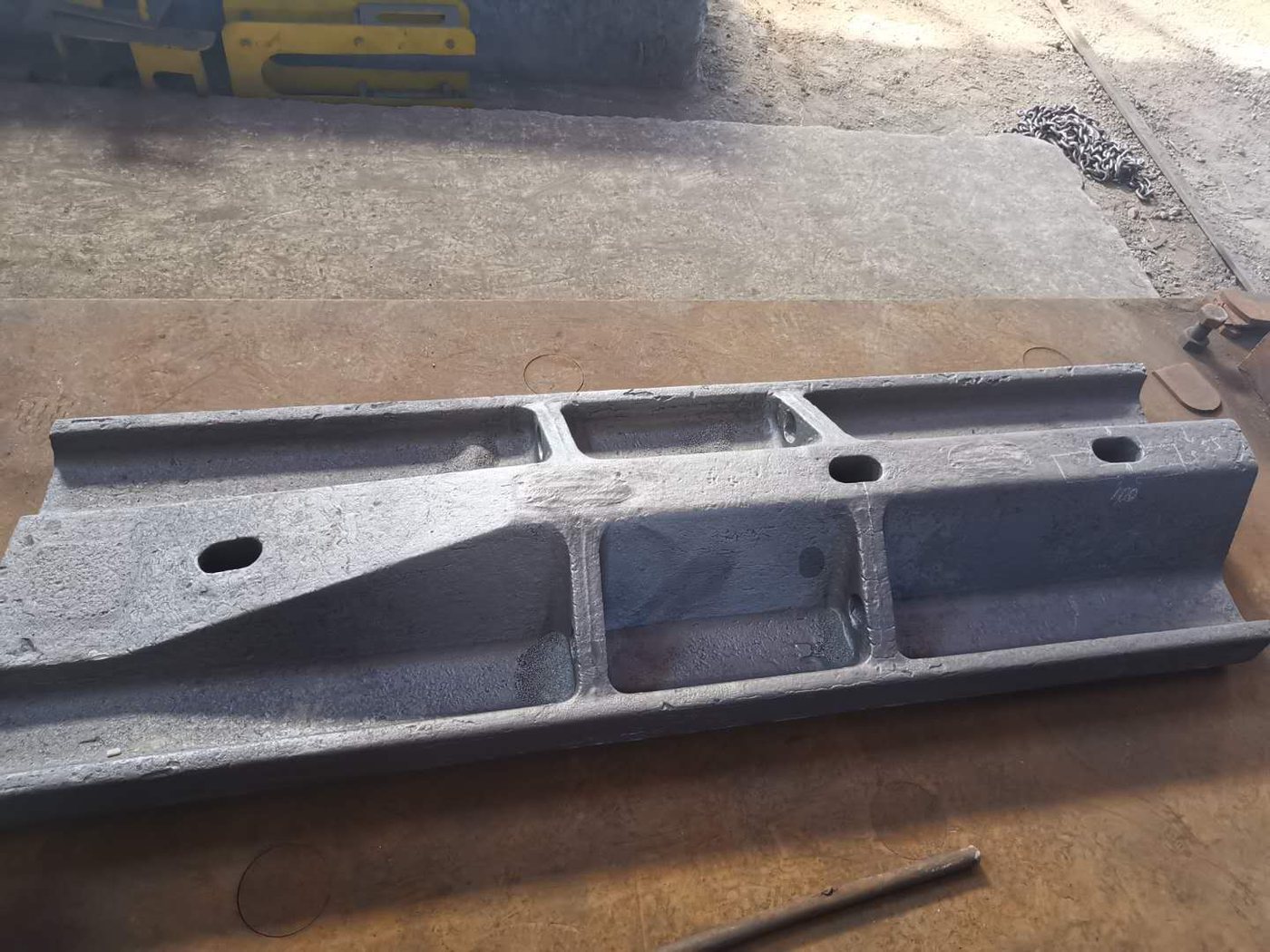
Mn13 / Mn13Cr2 work-hardening steel for high-impact positions. The classic choice for large SAG head liners and shell lifters where impact dominates; the surface work-hardens from ~230 HB to 500+ HB in service.
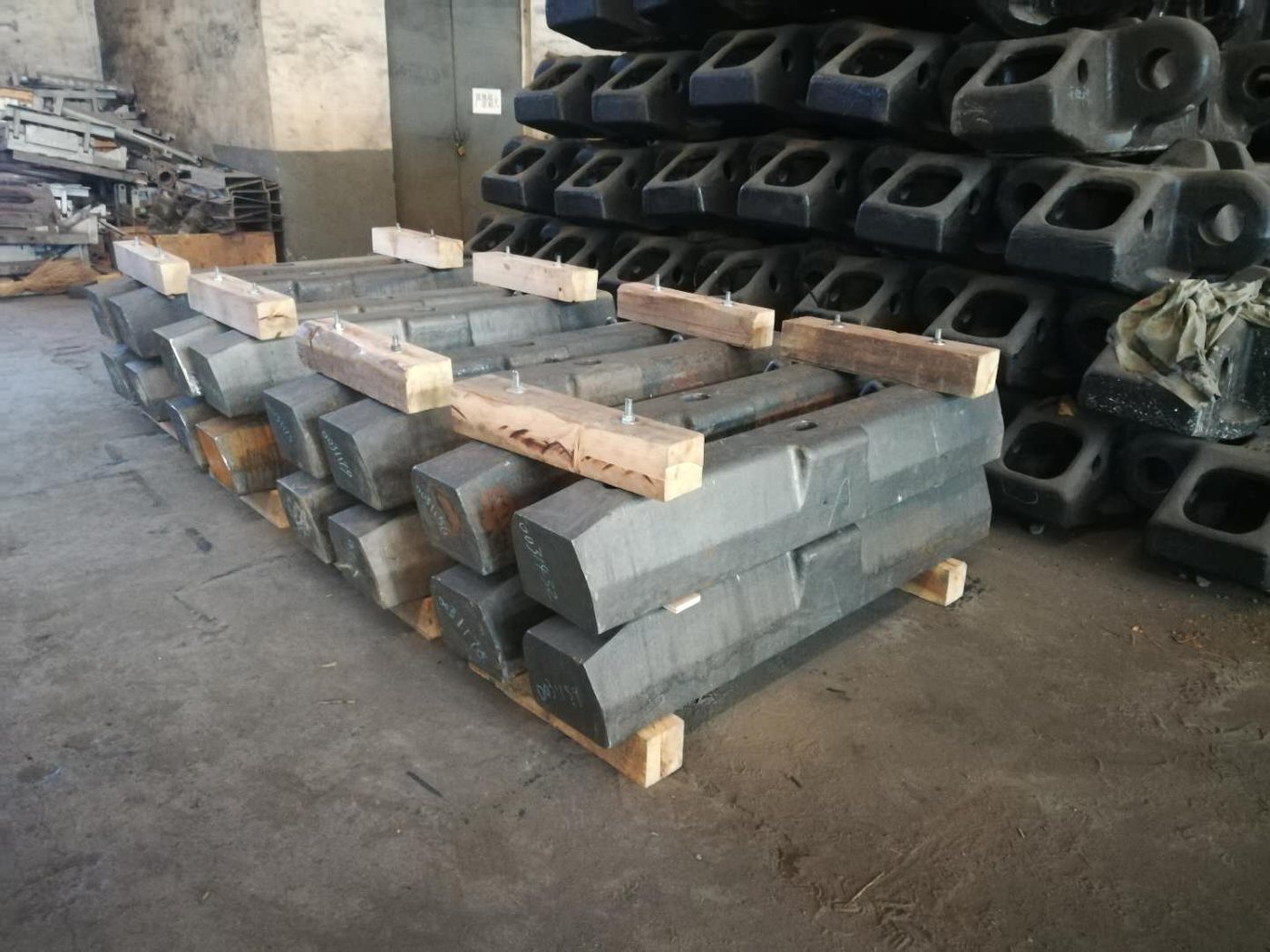
Pearlitic/martensitic Cr-Mo cast steel balancing hardness (300–400 HB) with toughness. Our default for SAG and ball mill shell plates and lifters — the material behind the 180-day campaigns on Ø8.53 m SAG mills.
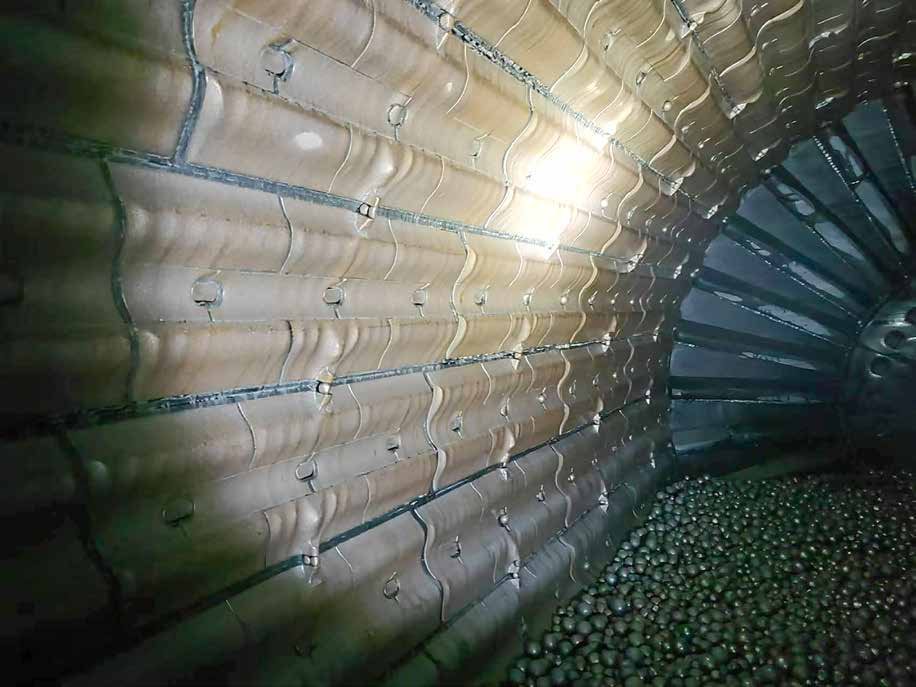
Wear-resistant rubber plates and lifters for ball mills and fine-grinding duty. 30–50% lighter than steel, far faster to install, dramatically quieter — ideal where abrasion dominates over impact.
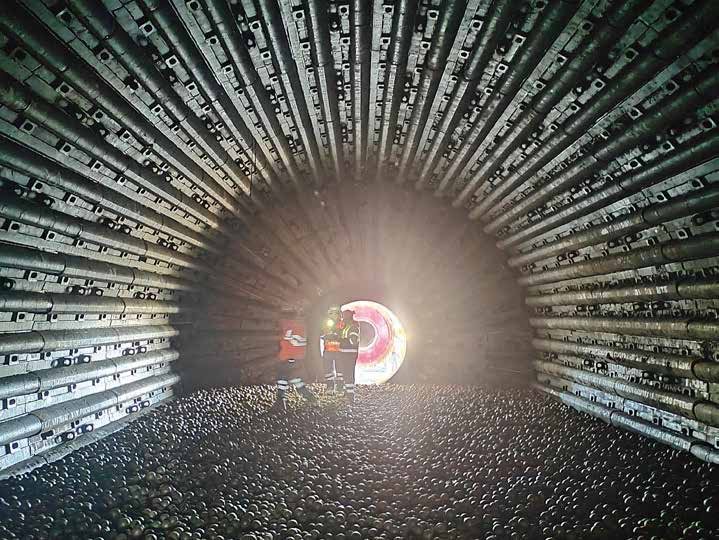
Steel-capped rubber lifters and rubber-backed plates combine impact resistance with light weight. The mainstream choice for large SAG mills today — and the natural partner of Megaliner relining.
Designed from the trajectory out
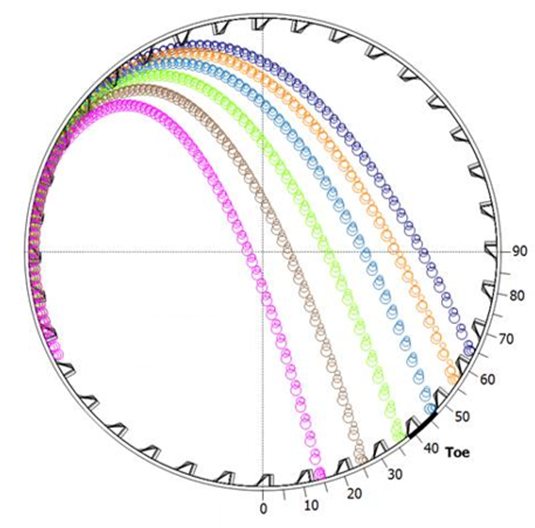
Liner profile is not a drawing-office habit — it is physics. We model the outermost ball trajectory for your specific speed, filling and ball size, then set face angle, lifter height, spacing and width so the charge toe and shoulder land where grinding happens, not where the liner breaks. New and worn profiles are checked separately, because a liner set must work from day one to the last week of its life.
Discharge gets the same rigour: grate aperture, open area and pulp-lifter geometry are sized to your slurry flow so the mill never pools. The same models (JKSimMet / Morrell) that size your mill verify the lining before metal is cast.
- Face angle, lifter height, spacing and width from trajectory simulation
- Separate verification for new and worn liner profiles
- Grate aperture and pulp-lifter capacity matched to slurry flow
- Wear-profile feedback from every campaign into the next design
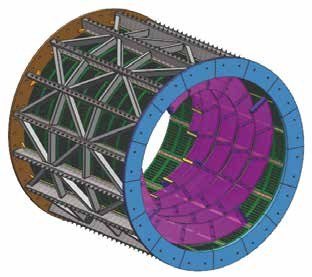
Megaliner + liner handler: relining measured in hours, not days
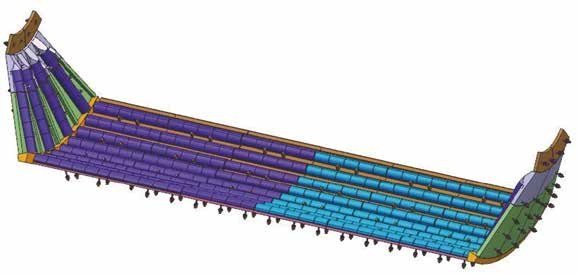
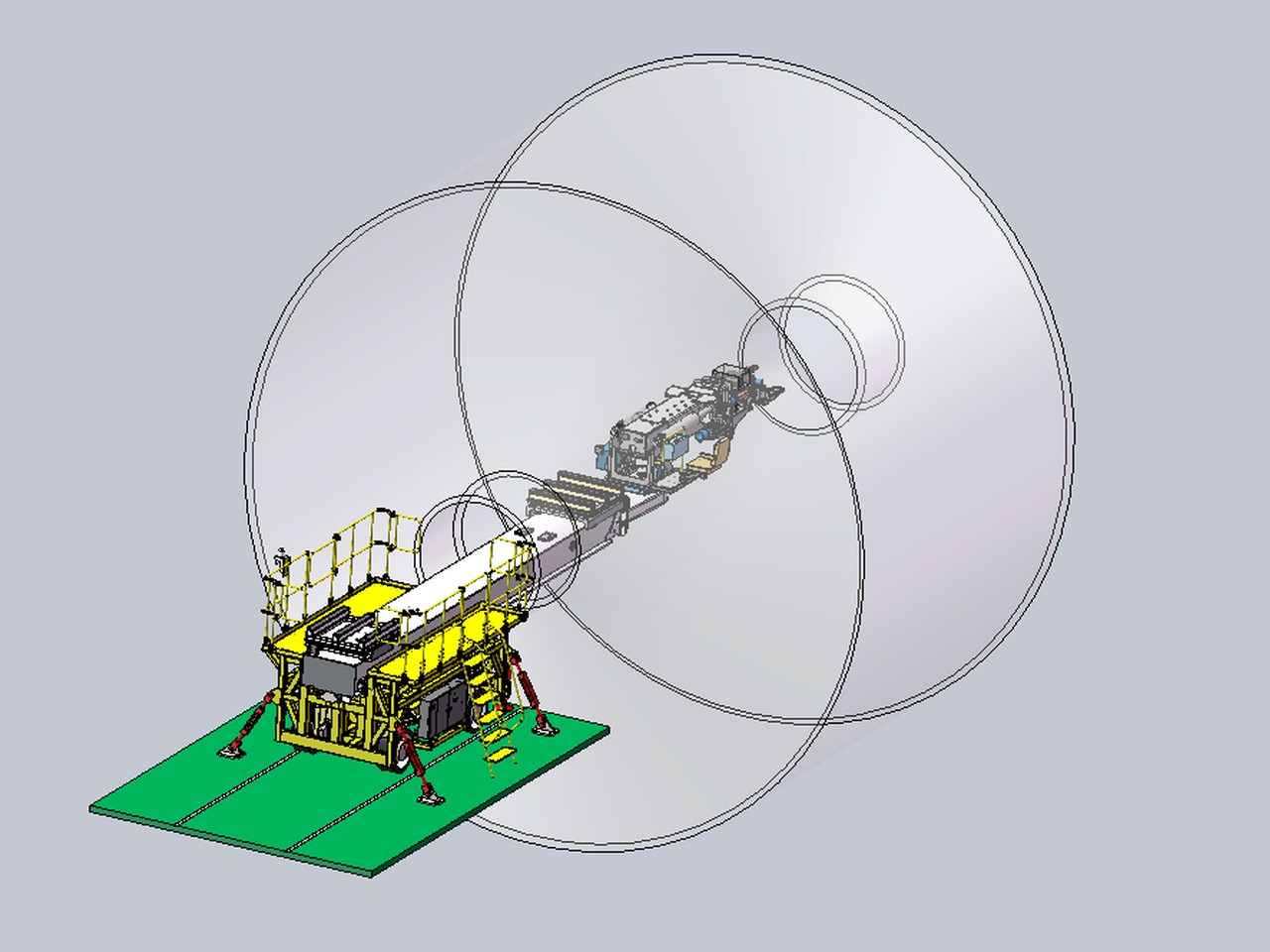
Megaliner replaces hundreds of small shell pieces with a smaller number of large, handler-friendly modules — each lifted, positioned and bolted by a mill liner handler without anyone entering the mill with a hand tool. Fewer pieces, fewer bolts, less time inside the mill: reline crews routinely cut shell relining time by 30–50%.
Because Yanvic supplies both the liners and the mill liner handlers (300–7,500 kg capacity, with Thunder Bolt recoilless hammers), module weight, lifting points and grapple interfaces are designed together — your lining arrives already matched to the machine that will install it.
- Large-format modules sized to your liner handler's capacity and reach
- Integrated lifting points matched to grapple tools
- Fewer bolts per square metre — compatible with Thunder Bolt recoilless hammer tightening
- Shorter shutdowns, fewer man-hours inside the mill, safer reline crews
Cast by China's heavy foundry champions, inspected by Yanvic
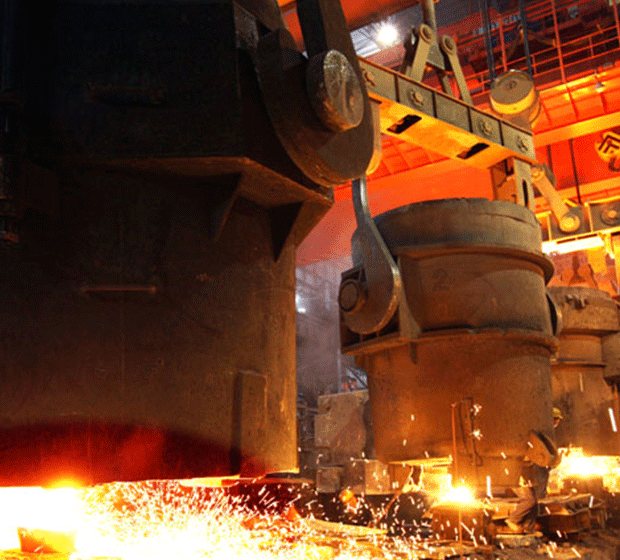
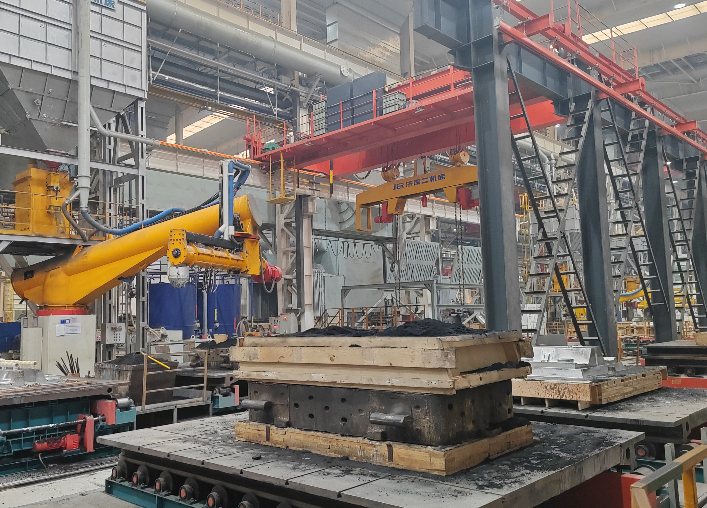
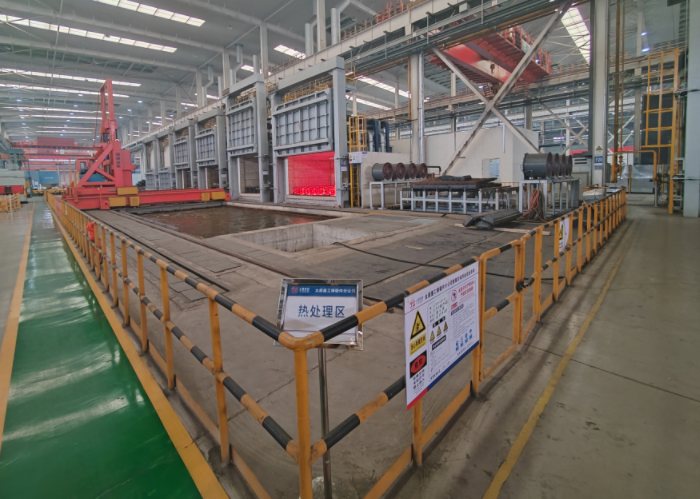
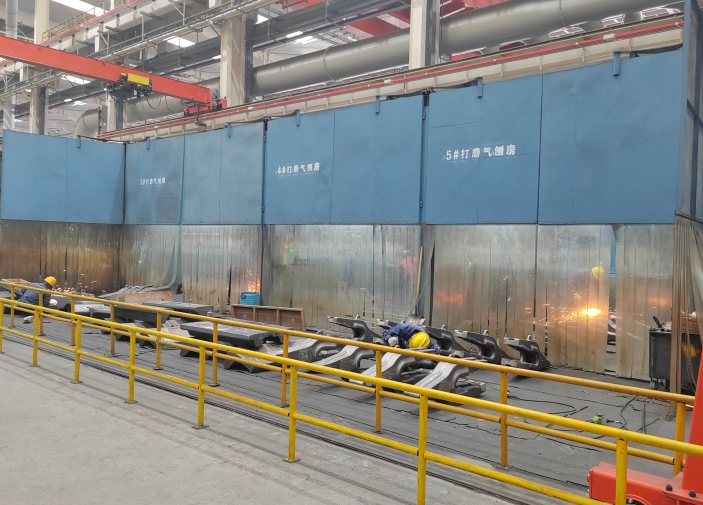
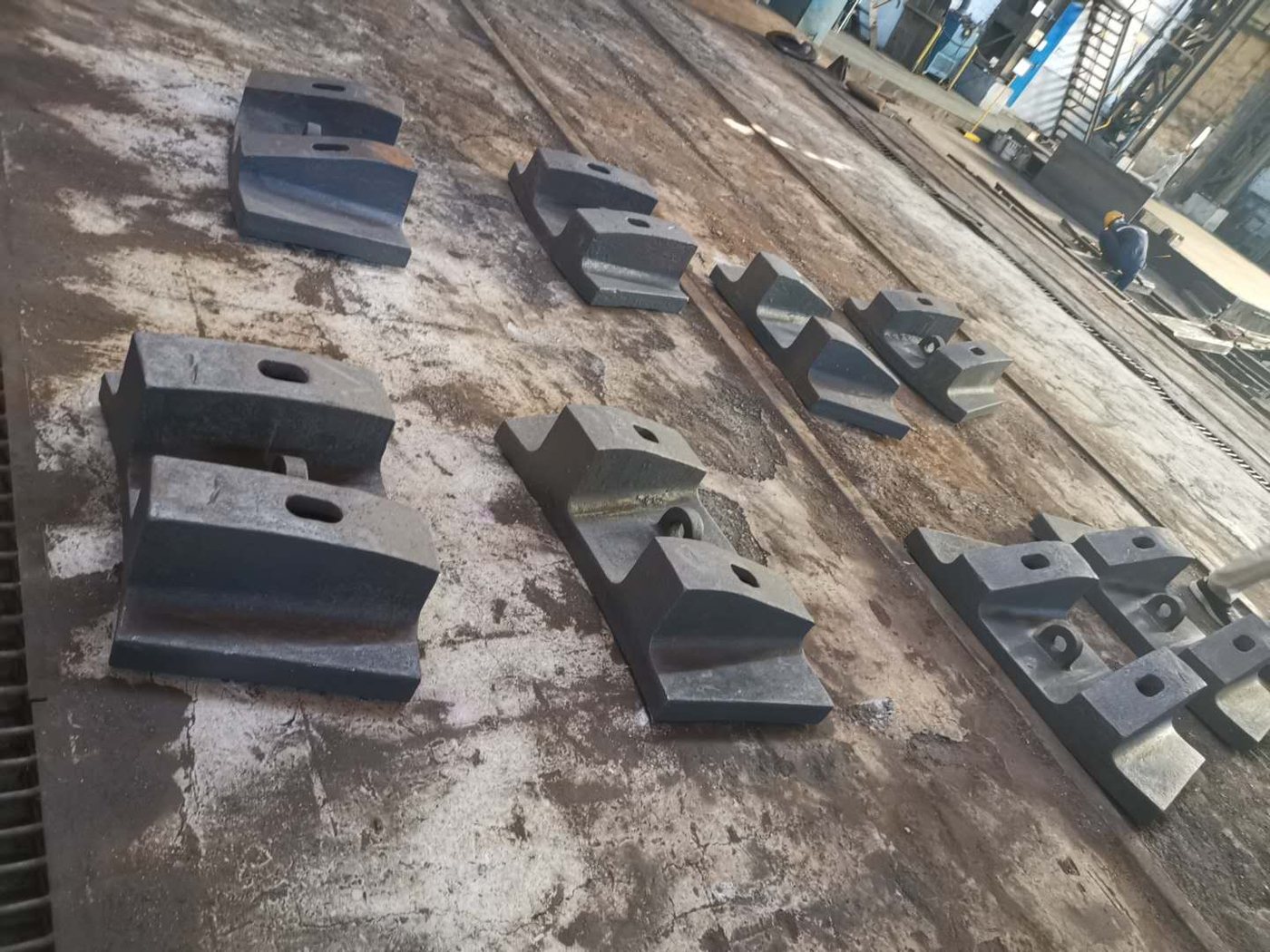
Casting is entrusted to CITIC Heavy Industries and Taiyuan Heavy Industry (TZCO). TZCO's dedicated wear-parts plant alone runs 36,000 m² of workshops with a design capacity of 42,000 t/year of castings from 50 kg to 15 t — electric-arc melting with AOD/VOD refining, automated flaskless and flexible molding lines, six intelligent quenching furnaces holding water-entry temperature within 5 °C, robot grinding lines and shot blasting up to 30 t.
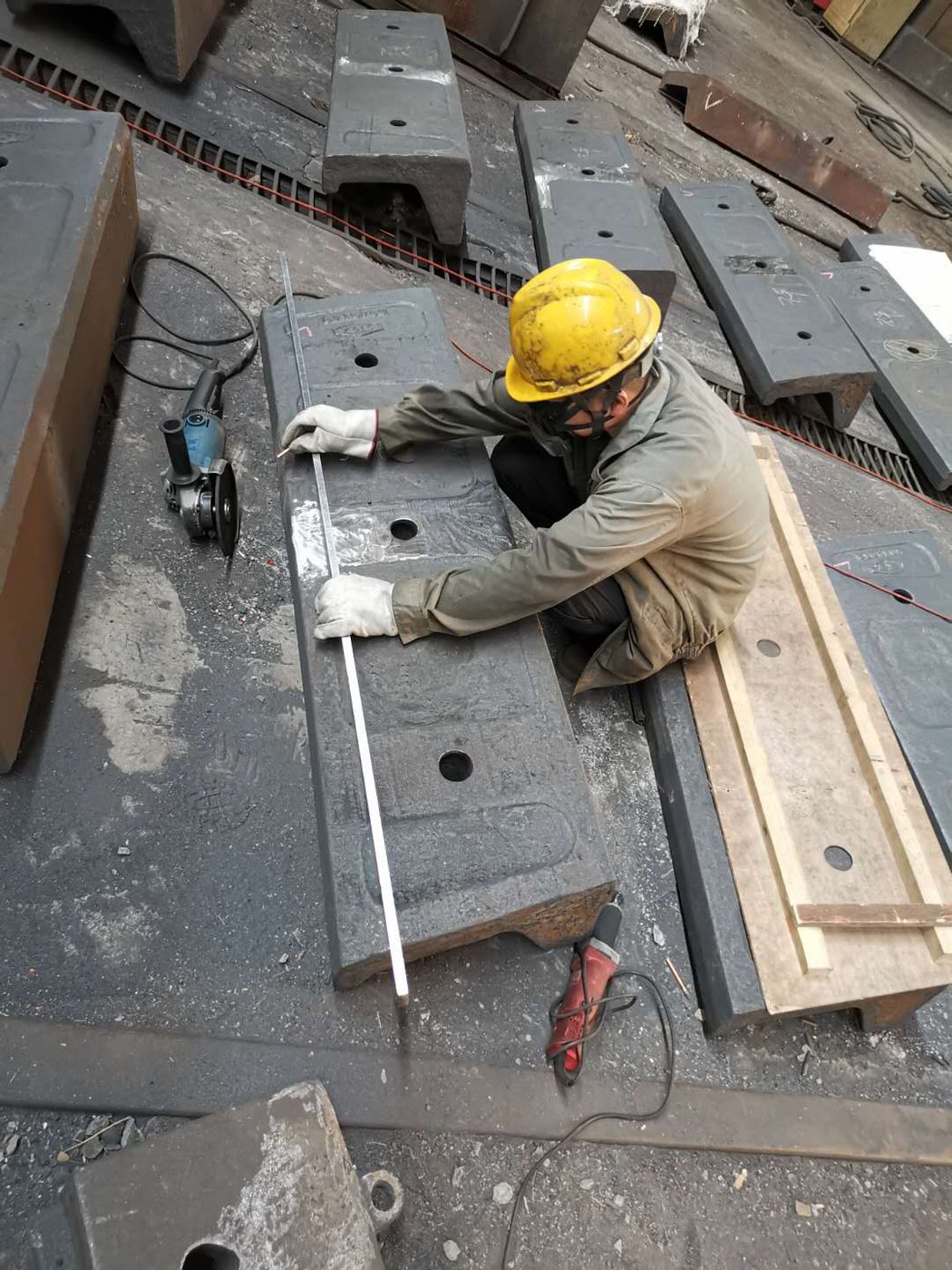
Every liner set ships under a Yanvic ITP: heat-by-heat chemistry, mechanical tests, heat-treatment records, UT/MT/PT where specified, and dimensional inspection against the approved drawings. Nothing leaves the foundry without our inspector's signature.
In the mill, not just on the invoice
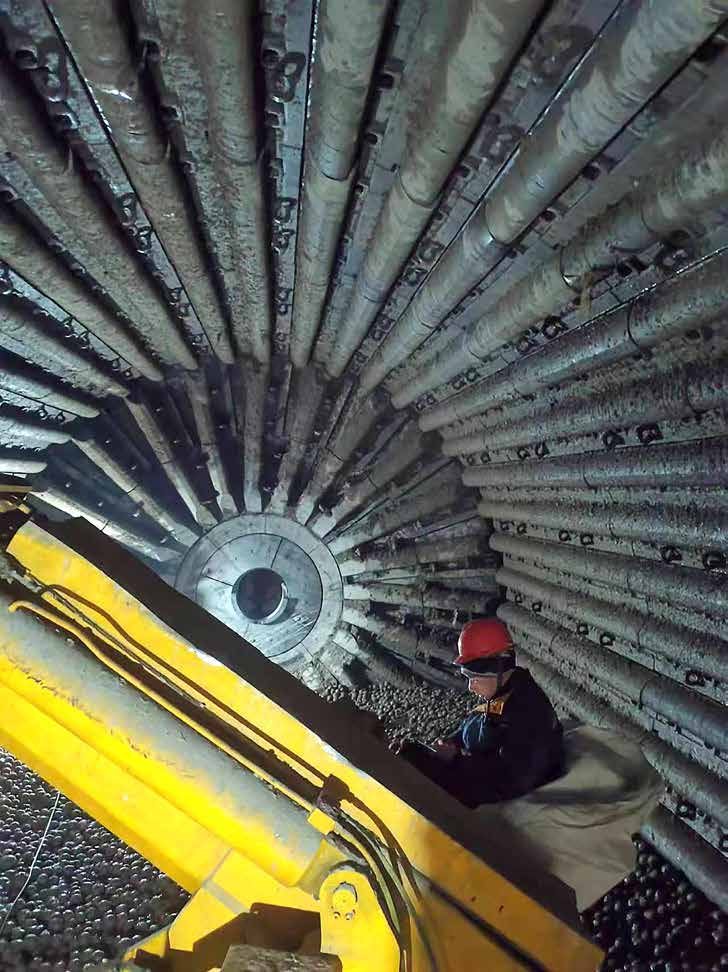
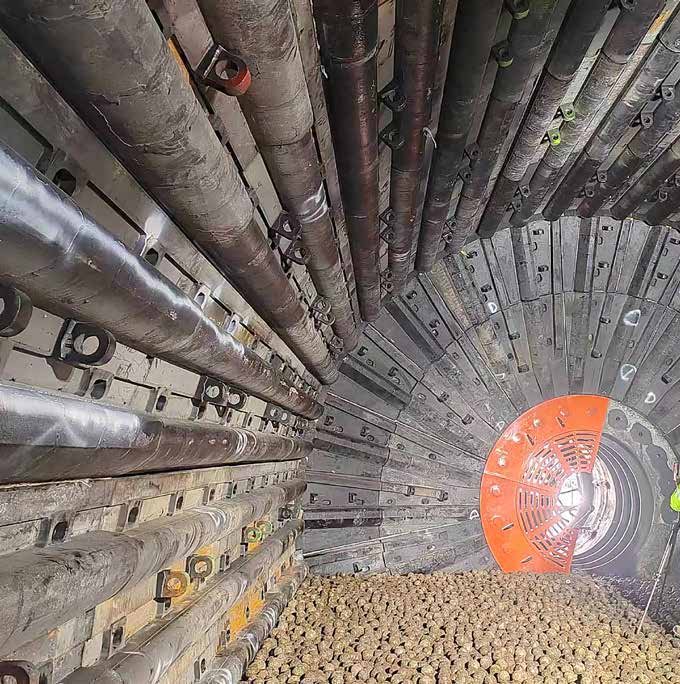
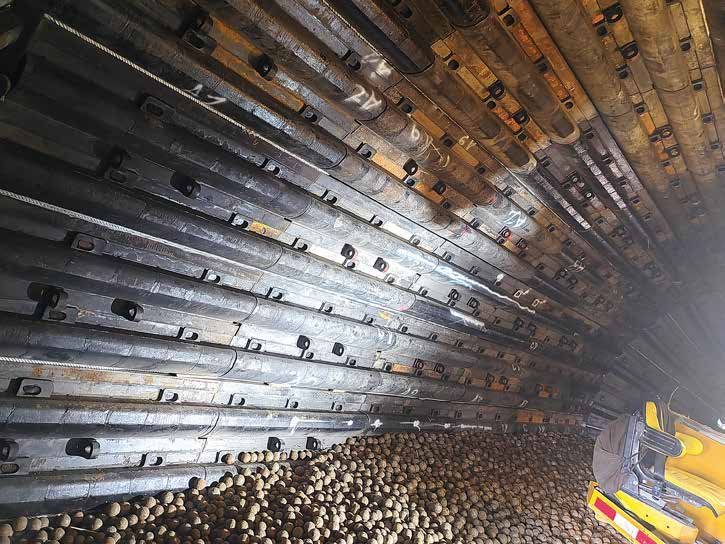
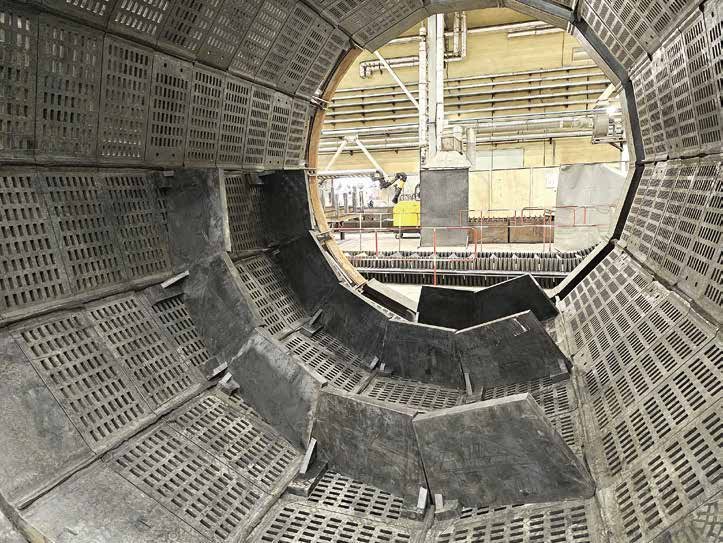
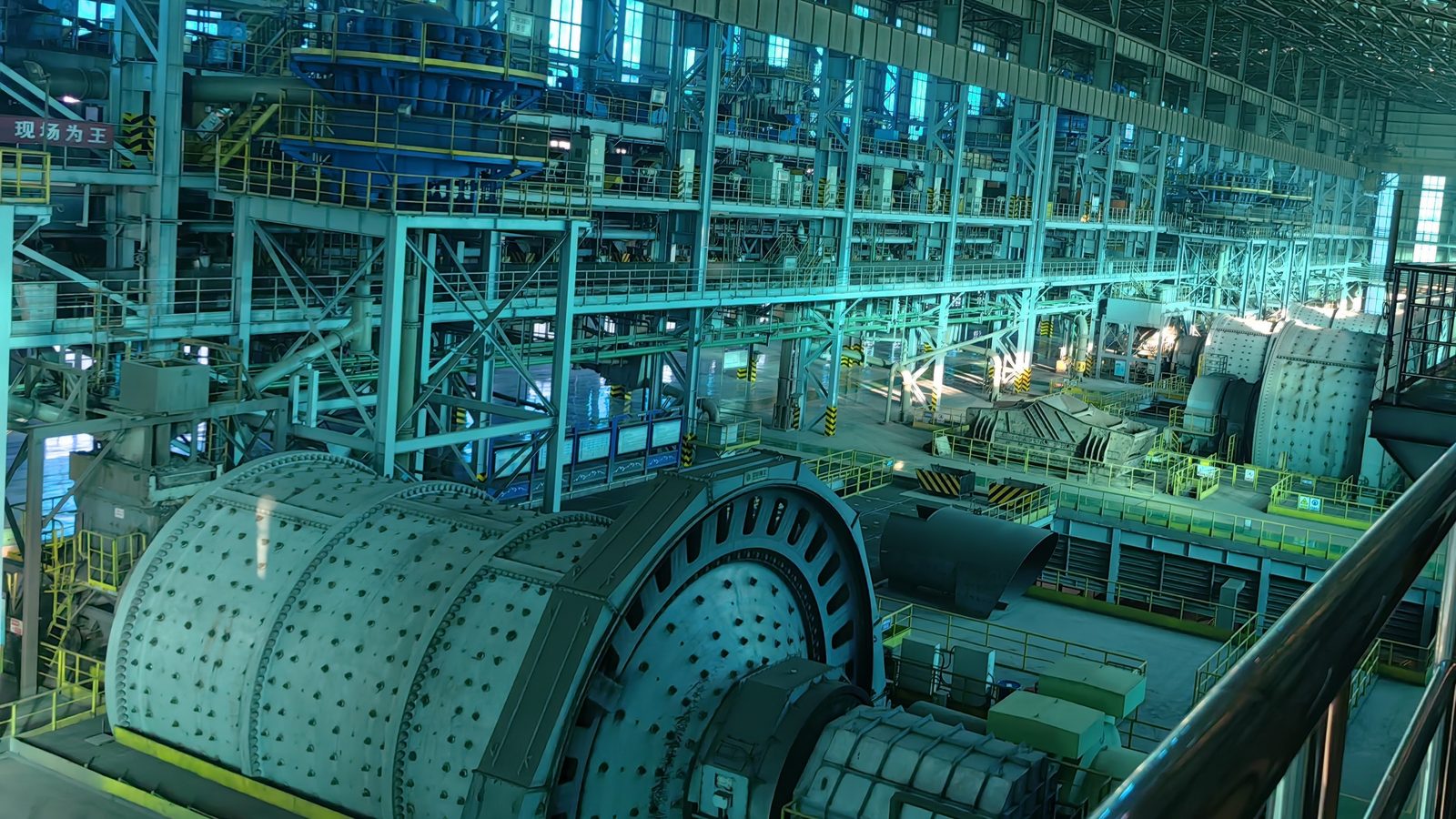
Liners are a wear business: the invoice matters less than the cost per ground tonne. We follow our linings in service — wear profiles, campaign life, breakage — and feed every measurement back into the next design. Current references include Ø8.53×3.96 m SAG shell liners exceeding 110–180 days, Ø10.97×5.4 m and Ø10.37×5.49 m SAG liner sets in series production, and rubber linings running on mills from Ø2.7 m to Ø12.2 m.
Frequently asked questions
Which liner material should I choose for a SAG mill?+
For large SAG mills with high impact energy, high manganese or Cr-Mo alloy steel lifters with alloy or composite shell plates are the standard. Rubber and composite linings win where abrasion dominates and relining speed matters. We select material position by position from your ore's drop weight (A*b) and abrasion data — often a different material for lifters, shell plates and grates of the same mill.
What is Megaliner?+
Megaliner is a lining concept that replaces hundreds of small shell pieces with a reduced number of large modules, each installed from outside the mill by a mill liner handler. It typically cuts shell relining time by 30–50% and keeps crews out of the mill. Yanvic designs Megaliner modules matched to the capacity, reach and grapple of the liner handler you operate — or that we supply.
Who casts the liners?+
Casting is entrusted to CITIC Heavy Industries and Taiyuan Heavy Industry (TZCO), among China's largest heavy foundries, with wear-parts capacity exceeding 42,000 t/year. Yanvic owns the drawings and material specifications and runs a full ITP — chemistry, heat treatment, NDT and dimensional inspection — before dispatch.
Can you supply liners for Metso, FLSmidth or CITIC mills?+
Yes. We manufacture to OEM drawings or reverse-engineer from site measurements and wear profiles, in manganese steel, Cr-Mo alloy, rubber or composite, for SAG, AG and ball mills of any make — including grate plates, pulp lifters and trommel panels.
Tell us about your ore — we will engineer the answer.
Send us your ore samples, drawings or equipment list. Our engineers reply within 24 hours with a technical proposal and budgetary quotation.